Showing posts with label Worship. Show all posts

Saturday, December 19, 2009

the democracy of the dead

Excellent post by Rev. Paul McCain. 

Are We A Small and Arrogant Oligarchy?

I can’t think of a more foolish attitude I harbor at times than when I look back on previous generations and assume they were ignorant, unenlightened, unaware and totally outside of what I’m thinking and experiencing today. I was reminded of something the British writer G.K. Chesterton wrote in his book Orthodoxy (Chapter 4):

“Tradition means giving a vote to most obscure of all classes, our ancestors. It is the democracy of the dead.”

Thursday, December 10, 2009

Thursday, November 19, 2009

Missouri "Worship Wars"

LCMS logo-(2c)-stack copyHere we are rapidly approaching 2010. Our synod faces critical changes in structure and governance, and budget shortfalls that are beyond the comprehension of most of the members of our churches. When all is said and done I believe the heart of our (LCMS) troubles still lie in worship practice. The competing factors are pulling the church in multiple directions and I fear that the only thing left for Missouri is the the birth of multiple tiny groups of churches that will refuse to be in fellowship with each other. Maybe it is the only solution left to us. The coming year, I believe, will see the determination of these issues.

But I hold out hope for the Missouri Synod. After all it is the synod of my birth. We are at our heart traditional, liturgical, practical and faithful to the Lutheran Confessions. At our heart we confess the faith of our fathers. (In spite of some who insist that this isn't our grand-father's church see "Through the Ages . . ."  http://www.lcms.org/pages/wPage.asp?ContentID=418&IssueID=27)  At our heart we know that all worship must find its center in Jesus Christ Crucified for the forgiveness of sins. We know the best way to worship is to speak, sing and chant the same texts as the faithful church has done over generations. At our heart we bring the Word of God to the world from our unique (Biblical!) law and Gospel perspective. At our heart we revel in the confession of the faith that has been handed down to us in the Lutheran Confessions. On the surface is the foolishness described by Phillip Magness in an article by Terry Mattingly (Mattingly and the Lutheran Worship Wars http://www.scrippsnews.com/content/mattingly-lutherans-and-worship-wars)

"What I found out is that we're a lot like Forrest Gump's box of chocolates," he said. "It says 'Lutheran Church-Missouri Synod' on the sign, but when you go inside you have no idea what you're going to get. ... Some of our churches are playing with the structure of the liturgy and some are playing with the content and our whole synod is trying to find out how to draw some boundaries."

As one pastor in the synod has said, "Now is the time for Confessional Lutheranism."  The world is unsettled and unstable.  People are looking for stability.  The message of God's great love for sinful people shown chiefly in the sacrifice of Jesus Christ on the cross is the message we have.  It is the message the world needs to hear and see.  What we need to show is a traditional, liturgical, practical, confessional worshipping community that clearly and uniformly presents Christ.  The best way to do that is the way the faithful church has done it: Word and Sacrament administered according to Christ's command; Hymns, songs and spiritual songs that clearly confess God's work for us in Jesus Christ; Preaching the law in its full force to crush the hearts of the faithful as well as the unbeliever AND the Gospel in its full force to sooth broken hearts with the comfort of Jesus Christ.  there is no church body that can do all these things at the same time as well as the Lutheran Church--Missouri Synod.  God grant it for Jesus Sake.

+SDG+

Pastor Jonathan C. Watt

Trinity Evangelical Lutheran Church

Creston, Iowa

Sunday, August 16, 2009

Michael Spencer - The Internet Monk; Worship Toolbox.

Rev. Spencer has a nice article in his "Evangelical Liturgy" Series.  "The Toolbox" explores the necessary tools for "giving distinctive evangelical content, flavor and boundaries to the worship service."  Michael's perspective is distinctively "evangelical" and not everything fits our Lutheran perspective, he gives some nice thoughts to contemplate.  Here's his section on "the Hymnal."  (Emphasis mine)

2. The Hymnal. I know, here we go.

The hymnal is a crucially important evangelical worship resource. While it can be supplemented, it should never be replaced. The education of a congregation to use and appreciate the resources in a hymnal will be the single post ecumenically broad, historically deep and theologically enriching experience most church members will have. There is more diversity, tradition, theology, church history and content in a good hymnal than almost any single book that you can put in the hands of a congregation. The hymnal represents and captures the journey of the church throughout history, and joins the worshiping congregation to the church around the world and throughout all time.

We are nothing short of idiots for getting rid of them, and I choose that word carefully. Who in the world decided that we would throw out two thousands years of worship because it didn’t fit in with our current plan to sound like the secular music of the last 40 years? Good grief, what a demolition job this has been. I know a lot of young people “like” the new music, but we have a responsibility to those who came before us, not to prefer or like what they did as much as they did, but to use it with respect and honor for the value that is in it. Handing the entire musical and lyrical heritage of two millenia of Christianity over to a “worship leader” to be eradicated in favor of contemporary music only is insane.

As a child, I spent hours in the hymnal during church. I learned vast amounts. Had the pastors and worship leaders used the resources of the hymnal wisely, it would have been even more enriching for me.

I want to commend the Lutheran Service book for putting the complete hymnal and ALL corporate and individual worship resources together. Having that hymnal in your hands- a tactile experience- is a significant part of worship we’ve underestimated. Use new music. Have the band from time to time. Project away. But the church of the past 2000 years is in that hymanl. In fact, we need more historically and culturally diverse hymnals, not more music for evangelical white people.

Hymnals vary widely in every way. Choose carefully and be forgiving of the inevitable flaws. The current 2008 SBC hymnal is a project involving both book and projection resources coordinated together. This is surely the direction of the future and holds real promise for ending the ridiculous war on hymns that evangelicals have perpetrated. We ought to hang our heads that we have become a generation more concerned that our children know the latest Hillsongs’ piece- which is fine and good- but that they NOT know the top 100 hymns in Christian history! Just reading the lyrics of Christmas carols is a theological feast.

For many evangelicals, the hymnal is the closest thing to a book of common prayer and worship resources they will have. Hymnals should be chosen carefully so they can be used t include calls to worship, litanies, creeds, etc. Keep making great hymnals out there, somebody! We need them.

Look at Bob Kauflin. Look at Indelible Grace. Look at good, blended worship at Piper’s church and conferences. Get a grip evangelicals!

Wednesday, May 06, 2009

What Are Men Looking for In Worship?

imageAn article in The Daily Mail http://www.dailymail.co.uk/home/index.html talks about what men want in church based on a poll. (The comments alone are instructive!)

Nearly 60 per cent of those who took part in a survey said they enjoyed singing - but added comments showing they preferred anthemic songs and 'proclamational' hymns as opposed to more emotional love songs.

Sixty per cent said they did not like flowers and embroidered banners in church, while 52 per cent did not like dancing in church.

The article lists these hymns as suggestions:

  • Onward Christian Soldiers (LSB 662)
  • And Can It Be
  • Guide Me O Thy Great Redeemer  (LSB 918)
  • All People That On Earth Do Dwell (LSB 791)
  • Be Thou My Vision 
  • How Great Thou Art (LSB 801)
  • Amazing Grace (LSB 744)
  • Eternal Father, Strong To Save (For Those On Peril On The Sea) (LSB 717)
  • Our God Reigns
  • Dear Lord And Father Of Mankind Forgive Our Foolish Ways

Note that over half of them are in Lutheran Service Book. I'd add a few others.

  • A Might Fortress (LSB 656 or LSB 657)
  • Christ Jesus Lay in Death's Strong Bands (LSB 458)
  • For All the Saints (LSB 677)
  • Lift High the Cross (LSB 837)
  • the list could go on and on...

Here at Trinity we are "men friendly."  Check out our list of "Favorite Hymns" it is caulk full of Guy Friendly 'proclamational' hymns.

My question is this:

If you take away "emotional love songs" from contemporary worship, is there anything left?

Pastor Watt.

Monday, March 09, 2009

Lord, Have Mercy! Christ, Have Mercy! Lord, Have Mercy!

Take the time to watch this video.  It is a wonderful description of what worship is all about. 

I've not yet read pr. Harrison's book but if this is any indication of what it is like I can't wait to get my hands on a copy!

http://mercyjourney.blogspot.com/2009/03/christ-have-mercy-bridge_08.html

Thursday, September 25, 2008

Rev. James Waddel Comments on My Comments.

Rev. James Waddel commented on my comments on his presentation at the 08 South Dakota Pastor's Conference.  I repost it here because of the time lapse.

http://sermons.wattswhat.net/2008/04/spring-pastors-conference-south-dakota.html
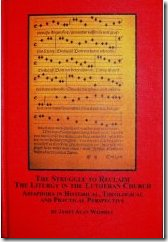
 

image I’m so glad I stumbled across your blog. You do a fine job of describing my presentation and the work that I’ve done on Lutheran liturgy. But rather than let someone else answer your questions about my work, and define it on their terms, I thought I would answer your questions myself.

One of the issues that has troubled me for a long time regarding the conversation about worship in the LCMS is that we are all too willing to approach this question with oversimplified answers, which also too often spiral into ad hominem attack. You may recall from my presentation how I talked about the state of the conversation in the church today, and how we have reached a point of impasse, where we are unwilling to listen to each other. “I’m right. You’re wrong. End of discussion.”

What I have done is to focus my analysis of the conversation about liturgy in the LCMS on assumptions and methodology. I intentionally avoided ad hominem by focusing my analysis this way. The unfortunate reality is that those who have themselves become comfortable with ad hominem attack in the debate only see ad hominem from others, because they are not open to the persuasion of others. To be open to the persuasion of others is one of the qualifications of the ministry according to 1 Timothy 3.3 (epieikee, “reasonable”). My sainted mentor Dr. H. Armin Moellering taught us this at the seminary.

Why did I pursue this question? Let me answer this on my own terms. As I stated in my presentation and also wrote in the introduction of my book (I hope clearly), I began my study of liturgy with the intent of catechizing my congregation NOT to adopt contemporary forms of worship. I had been trained to accept the assumptions of Liturgical Theology, one of which is to be deeply suspicious of all contemporary forms of worship. The goal of catechizing my congregation was to teach God’s people there that the historic liturgy was a gift from God, and to abandon the historic liturgy would be an unfaithful thing to do, because abandoning the liturgy (or changing it) would damage the pure proclamation of the Gospel and the reception of the sacraments as they are given in Scripture.

The first thing I did to prepare for this catechesis of my congregation was to study the Scriptures and the Lutheran Confessions. Contrary to what some who disagree with my point of view might think, I thoroughly investigated what the Lutheran Confessions have to say about our Lutheran way of worship. My presentation alone should have clearly demonstrated that. The book speaks for itself. As do my other articles on Lutheran worship which are available on line for everyone to read at the CONCORDIA JOURNAL. The amount and the detail of the documentation are what made the study what it is. It isn’t perfect. I don’t have such a megalistic view of myself. I will say, however, that I agonized over whether to publish it. I went back and forth for almost two years. What tipped it for me was the unwillingness of too many in the LCMS to have a meaningful conversation with someone with whom there is disagreement.

(And just to be clear: I am not “selling” my book to gain royalties. I make no royalties from this book. None. It is all gift on my part. If anyone questions this, I am more than happy to put you in touch with my publisher, with whom I am in contact regularly. I give him permission to share this personal information about my contract with anyone who needs to know.)

When I went to the sources (Scripture and the Lutheran Confessions) to clarify for the people of my congregation the blessing of historic liturgy and the curse of contemporary form, what I found was this: What is being written by Lutheran scholars today about liturgy contains subtle contradictions and revisionist readings of the sources, proof-texting, and generally bad methodology driven by wrong assumptions (that have been adopted from Roman Catholic and Eastern Orthodox Liturgical Theology). As I state clearly in my book as well as in my presentation: the goal is correct (to defend and extol historic liturgical forms); but the assumptions and methodology are incorrect.

Once I realized that the assumptions and the methodology I had been taught were incorrect, I was then able to allow my assumptions and methodology to be reshaped by Scripture and the Lutheran Confessions (apart from any intrusion from other faith traditions).

Why do my criticisms seem to be aimed more at one side than another? That’s a fair question, but it’s a question that can only be answered by me, only by asking me. It is not fair play in the discussion for someone to speculate as to why my critical analysis was presented the way it was, and then use that speculation as a means to advance a position that cannot be supported by Scripture or the Confessions.

Remember, I began this whole study where you are, in unqualified defense of the historic liturgical forms published in our hymnals. I still think it is right to defend the historic forms in our hymnals. However, after studying Scripture, the Lutheran Confessions, historical writings contemporaneous to the Confessions, Luther, Melanchthon, Chemnitz, and more contemporary authors like Elert and Sasse, I have come to understand that the only worship prescribed in the Lutheran Confessions is the pure proclamation of the Gospel and the sacraments administered in accordance with the divine Word (AC VII), period. Humanly instituted rites and ceremonies in liturgy are not worship ordained by God, as FC X explicitly confesses. Luther, Melanchthon, Chemnitz, Sasse, et al., all consistently made this point, and they made it very clearly.

Why do my criticisms seem unbalanced? Because it is necessary that we get our criticisms of contemporary form right. We do not correct an error by confessing the error’s opposite, something you were correct to take away from my presentation. This is a skewed model of confession (wrong methodology) which skews our approach to almost everything—how we read the Scriptures, how we read the Confessions, how we approach the whole liturgy question.

This was Matthias Flacius’ model of confession, and it was written out of the Formula of Concord. The model of confession the Formula of Concord gives us is this: to confess straight ahead the truth and freedom of the Gospel. We do not correct an error by confessing the error’s opposite. If that is our model of confession, then we should not be surprised to find ourselves stumbling along in the ditch on the other side, or bending the sapling too far (as Chemnitz put it).

I think my work is viewed to be unbalanced only by those who have this skewed model of confession.

Instead of letting those who are unwilling to have the conversation with someone who disagrees with them define my work, let the reviews of my work speak for themselves, reviews that were written by trained specialists in this field and trusted theological leaders of the church.

“I greatly appreciated your book, [and] have heartily encouraged others to read it. . . . it moves the conversation on worship forward in a sound, scholarly, healthy and balanced way.” — Rev. Dr. Joel Lehenbauer, Executive Director, LCMS Commission on Theology and Church Relations

“I was most pleased with the scholarly and theologically balanced approach you took in your book. . . . The theological integrity that you demonstrate is much needed throughout the LCMS. . . . Thank you for writing this excellent book.” — Rev. Dale Sattgast, President of the South Dakota District, LCMS

“Waddell successfully enunciates a Lutheran theology of worship devoid of legalism and license. . . . [and] captures the wonder of being a Lutheran, liturgically speaking . . . . Lutherans neither make liturgical forms necessary nor espouse an anti-biblical, anti-creedal license in contemporary, cultural expressions. That makes this book necessary reading for transcending the traditional-contemporary worship divide.” — Rev. Dr. Kent J. Burreson, Assistant Professor of Systematic Theology, Assistant Dean of the Chapel, Concordia Seminary

“This is an important book for our time and context. . . a book of immense importance for our discussion of worship and church unity. It deserves to be widely read and discussed.” — Rev. Dr. Steen Olsen, Former President of the Lutheran Church of New Zealand

“. . . a formidable critique of liturgical theology . . . in the Lutheran Church . . . . he has weighed in on a contentious issue in an impressive way.” — Rev. Dr. Frank C. Senn, Former President, the North American Academy of Liturgy

“. . . provides a distinctly Lutheran Liturgical Theology based on Lutheran Reformation principles and documents, over against a specifically Roman Catholic or Orthodox or Ecumenical approach. This is a major contribution to the wider debate on Liturgical Theology, and would be useful to scholars in this field, and to wider ecclesial debate.” — Dr. Bryan D. Spinks, Professor of Liturgical Studies, Yale Institute of Sacred Music

“Our church is getting caught up again in this issue and any resource which helps us to discuss, instead of merely cuss, our way through is greatly appreciated.” — LCMS Pastor in Kansas

Thursday, July 10, 2008

The Value of the Liturgy: A Convert's View

From Rev. Paul McCain's Blog: Cyberbrethren

Here is a well written summary of how the Lutheran liturgy is a blessing to those coming in to our congregations from churches that either are non-liturgical or who have moved away from it. This is written by Mr. James Blasius. He is happy to grant permission to reproduce this for anyone who finds it helpful.

I grew up in a fine Presbyterian church - a good church, excepting for the Sunday school unit on higher criticism that traumatized me. But one thing of which the Presbyterians never had much, and now have less is the liturgy. And liturgy is something I desperately wanted. I didn’t know it’s what I wanted, but I loved the few times we’d do responsive readings from the Psalms, the doxologies, and so on.

As a nouveau Lutheran (vs. an Old Lutheran, who would have the catechism memorized, would know the colors of the church year, and would know the difference between Matins and, um, not-Matins), I may yet have some insights on the liturgy that those who have lived with it don’t: A poor man might have a greater appreciation for the marvel that is clean tap water than a rich man.

  1. The liturgy is memorable. I love confession and absolution, and miss it terribly when the service doesn’t have it. Because I can remember so much of the liturgy, the confession rolls off my lips any time I am reminded of my sinfulness (although I don’t typically absolve myself). The words are concise, essential, complete, scriptural. And there are the songs, praise, thanksgiving, doctrine. These appear on the tip of my tongue at appropriate or inappropriate moments. It gives me a wider repertoire than I had as a child, where our regular service component was limited to a doxology and a benediction.
  2. It’s scripture. The Lutheran Service Book has nice scriptural references next to each part of the liturgy, and Christians love to hear the words of scripture. They dig it. Scripture makes ‘em want to dance in their underwear (well, an ephod) as the ark did for David. In a world where a standard church reading is one verse, being surrounded by scripture throughout the service is A Good Thing.
  3. It’s participatory. Try going to a service where your only participation is to sing a hymn, or worse, just sit there and listen to a person with a microphone on a stage. It’s better to be able to have a role and speak the words of scripture as part of the body of Christ. Our society is oriented towards the individual, but the church is a body with each part doing working together. Somehow liturgy makes that real.
  4. It unites us with Christians of all times and places. Liturgy unifies us only with the Christians next to us, but with the larger church in “all times and places.” The liturgy is similar to what was done 1000 years ago and 1900 years ago, and the singing of psalms goes back to David’s day. Another way to look at it: In New Testament days, there were no pastors driving up the aisles on Harleys and there were no swaying dancers in church, but there was most certainly the singing of the scriptures, there were doxologies and Scripturally meaningful songs of praise.
  5. It’s filled with song. Music means something to us that’s different from prose. The Psalms have been sung since they were first written: David, in addition to dancing before the ark, was singing and making music with Israel when the ark was being brought to Jerusalem, and Paul writes in Ephesians 5 about “addressing one another in  psalms and hymns and spiritual songs, singing and making melody to the Lord with your heart.” And music is beautiful. There is value in it, and liturgical services are brimming with it.
  6. It's a wonderful vehicle for the Sacraments. I think of it like wrapping on a gift. It beautifies the Lord's gifts coming to us through Word and Sacraments and underscores and highlights what we believe, teach and confess about the means of grace: God acting among us and for us. Reverent, holy, sacred, a place and  time set-apart—that's why the liturgy is a great delivery-system for the Sacraments.

One can have a good church without a good liturgy, but good liturgy is an excellent tool for worship and the Christian life. I’d put it as second in importance only to sound doctrine, in my opinion, for it supports and enhances the teaching of God's Word.

HT: http://cyberbrethren.typepad.com/cyberbrethren/2008/07/the-value-of-the-liturgy-a-converts-view.html

Friday, May 02, 2008

Of diversity and the use of statistics in worship:

A very nice article by David O. Berger. Very much worth reading.

http://seminary.csl.edu/facultypubs/Home/tabid/36/ctl/Details/mid/512/ItemID/105/Default.aspx

He concludes:

The historic liturgies of the Christian Church are based on the fundamental spiritual needs of sinful mankind.  They are and remain, in the best sense, counter-cultural.  They are part of our identity as Christians – as Lutherans.  Their content is the very content of our faith. The content may change slowly over time, absorbing contributions of the highest order of each age, but always passing these contributions through the fine-meshed sieve of the chronological communion of saints.  The Lutheran hymn / chorale is a prime example of such absorption.  The person-centered song tradition of Revivalism, including CCM, pales in comparison to the miraculous marriage of teaching Word and elevated music in Lutheran hymnody.  O. C. Rupprecht’s, “The Lutheran Chorale in the Life of the Child” (Valparaiso Church Music Series, no. 3, 1946) should be read by every church music director and pastor.*  If the Divine Service is constantly re-fashioned and adapted to attract seekers / shoppers or fulfill some other “felt need,” it is being used for the wrong purpose.  Creating faith is the work of the Holy Spirit, using the biblical means of baptizing –– yes, infants too –– and sound teaching.  In our worship, God provides us with His gifts of Word and Sacrament.  Thorough catechesis (the historic liturgy also teaches) and reverent Word and Sacrament worship centered on the gifts of God to His people are the visible manifestations of a living church and the means by which He builds it.

Tuesday, April 15, 2008

Bored with the Liturgy? pr. Hall has some advice.

Since St. John's will soon be moving to the new LCMS Hymnal, Lutheran Service Book I thought this comment from Rev. Christopher Hall at his blog "This Side of the Pulpit" was appropriate.

Wisdom! Let us Attend

Find yourself growing bored with the liturgy?

Is it getting stale, saying the same things week after week?

Does every Sunday service seem the same?

Desire something a little different, you know, to mix it up a little bit?

There is a certain cure for this ennui: pay attention to what you are saying, and what is being said to you.

Thanks pr. Hall.

Thursday, April 10, 2008


Spring Pastor’s Conference,
South Dakota District, Dakota Dunes, SD


Our speaker, Rev. James Waddell (author of The Struggle to Reclaim the Liturgy of the Lutheran Church in Historical, Theological and Practical Perspective) gave us much to think about. His topic “Clearly Communicating the Good News: Moving beyond Worship Wars,” was insightful. I still have many questions in my mind and yet, much of what he said makes a lot of sense. Now is the time to digest (and re-read the book). He has done an extensive amount of research and much of it very enlightening, indeed the basis for good discussion.

Here is my understanding of several points from Pr. Waddell that I found interesting:

  • We do not serve the church well by confessing the opposite of an error in order to correct an error. As my seminary professor Dr. Paul Raabe used to say, “that’s falling in the other ditch.” (Many “confessionals” are guilty of this practice… me included.)
  • The Confessions do not prescribe what form worship is to take. i.e. , “The Historic Liturgy” is not a “Confession” of the church in the sense that the Book of Concord is a confession of the church. Scripture (Norma Normans) is the only rule and norm for faith and life in the church. The Confessions (norma normata) are the standard that is “normed” by scripture. They accurately reflect the teaching of scripture, but are subject to scripture none the less. Liturgy is normed both by scripture and the confessions. No teaching or practice of the church is “normed” by liturgy.
  • The church cannot pre-scribe a particular form of worship. Waddell believes that some practices and content can be rejected when they fall outside of our confession. (i.e. we don’t sing hymns (songs, etc) that confess false doctrine.) He gave us a useful tool to help evaluate lyrics for use in worship.
  • The Lex orandi / Lex Crendi principal isn’t found in the confessions.
  • Worship Style and substance must be guided by the principal “Lutheran Theology for Lutheran Worship”
Some critique: Waddell claims to be standing on the middle ground and I have great respect for the positions he has brought to the floor. Much of his criticism is leveled at the “confessional” side of the isle and very little at the other. Since Waddell spends little time speaking against the arguments of the “Contemporary Worship” crowd, many “Confessionals” will simply see this as an attack leveled against them. While much of his criticism is in many ways valid it would stand in better stead to have some balancing arguments.

While I may not completely agree with all that pr. Waddell has given us he has sparked a good conversation and thought process. I’ll be processing the presentation for quite some time to come.

Pastor Watt.

Thursday, September 20, 2007

Thinking about Your Funeral (updated)

I've written an article for the September (2007) issue of the Lutheran Witness titled Thinking about Your Funeral.

You can read most of it on the Lutheran Witness webpage. My personal subtitle was What Your Pastor Wants You to Know About Planning Your Funeral Check out Thinking about Your Funeral in the print edition or online.

Also, I'll be interviewed on KFUO Radio program Issues, Etc on September 6th about 5:30pm.

You can listen to the interview by going to IssuesEtc.org, clicking on "Listen Online" then scroll down to the 3rd hour of Thursday, September 6th. Select either the WMA or MP3 audio file. My interview is the second half of the hour.

Or you can download the Mp3 file directly Sept 6, Hour 3, Issues Etc right click and select "Save As".

Saturday, August 25, 2007

Thirteenth Sunday after Pentecost (Proper 16), August 26, 2007, Luke.13.22-30

Get the Podcast Here!
He went on his way through towns and villages, teaching and journeying toward Jerusalem. And someone said to him, “Lord, will those who are saved be few?” And he said to them, “Strive to enter through the narrow door. For many, I tell you, will seek to enter and will not be able. When once the master of the house has risen and shut the door, and you begin to stand outside and to knock at the door, saying, ‘Lord, open to us,’ then he will answer you, ‘I do not know where you come from.’ Then you will begin to say, ‘We ate and drank in your presence, and you taught in our streets.’ But he will say, ‘I tell you, I do not know where you come from. Depart from me, all you workers of evil!’ In that place there will be weeping and gnashing of teeth, when you see Abraham and Isaac and Jacob and all the prophets in the kingdom of God but you yourselves cast out. And people will come from east and west, and from north and south, and recline at table in the kingdom of God. And behold, some are last who will be first, and some are first who will be last.” (Luke 13:22-30, ESV)
Grace and peace to you from our Lord and Savior, Jesus Christ. Amen.

You’ve heard a lot about how God opens doors. Here Jesus talks about an open door and how it is going to be closed. Not everyone will be inside when it does. The man on the road asks if only a few will be saved? Jesus changes the question to ask “Are you inside?” The door to God kingdom is open today, but someday it will be closed. It will be locked and there will be people who are locked out! Now of all the things we hear in church this is one we wish we didn’t. But Jesus makes it very clear. Not everyone will be saved. There will be a time when God closes the door of his grace. You and I know people who are going to hell, not because of the things they do, but because of what they believe. Faith in Jesus Christ for forgiveness of sins is necessary for salvation, nothing else will do. Believe in Jesus Christ alone and be inside, believe in another way of salvation, including the multitude of ways of earning your own salvation, and you’ll be outside when the door is shut. Recently a world wide “Christian” organization stated that Christians needed to reconsider the claims of exclusive salvation in Jesus Christ alone for the sake of “cooperation with other non-Christian religions.” Jesus will have none of that. If you are inclined in that direction, repent of that sin. It is sinful and unloving to mislead people by neglecting to tell them of the only way of salvation in Jesus.

Right now Jesus makes it very clear that the door is still open. It is open wherever Christians speak up and tell people about Jesus and what he has done. But, it is open right now and especially right here where his Word is preached and his Sacraments given according to his command. We can actually see the open door here. We see it and feel it as water together with God’s name washes away our sins and makes us a member of his God’s family. We are pulled through the open door by God’s action, brought where his family is and given his very name. Inside we sit at table with him, in his very presence, and eat the food that we need to grow in faith. We hear his words that are spoken to us to keep our focus on what’s important. And yet there is a danger even here where God so clearly has the door open. There is a danger because the open door will not always be open as it is today, as Jesus tells us. Many of those inside will walk out the door.

Sometime in our future, maybe sooner than any of us know, the door of God’s grace and patience will come slamming shut. Jesus tells us clearly what that moment will be like. The most difficult part is the fact that not everyone will be inside. Jesus makes it very personal, too. He speaks to his hearers, and us, just like we are the ones left outside, wanting to get in. He says, When the master closes the door you will be outside and start knocking… For the people left outside there won’t be anything they can do to change the judgment, but they will try anyway. It is like Jesus is saying, “You will pathetically knock on the locked door, hoping to gain entrance through persistence; Hoping that the door will be opened again so you can escape the judgment that has come. But the door was open before, the there was plenty of opportunity, God’s promises to save were heard everywhere. You have foolishly ignored the chance to come in.” The words are harsh. They reach out and twist our hearts. Jesus means them. But the protest of the condemned will not be heard. It will be spoken by many people who mistakenly think that having their names on the church membership roles, means they should be let in. The protest will even be made by some who spent a great deal of time in church, and gave money to cover their fair share of the budget. Jesus tells us without a doubt; it isn’t spending time with Jesus that makes a difference. “Lord, we ate and drank in your presence! We heard you teaching! We spent time around you! Our families have always belonged to this church.” Those words and that pleading won’t have any meaning for Jesus when the door is closed. “I don’t know you.” He will say from behind the closed door.

It may shock you to think that Jesus is talking to you as if you are outside. Jesus wants you to think about that possibility. He wants you to consider what it means to not be known by him. Jesus says salvation is found in Jesus knowing you. He doesn’t call for us only to spend time with him. Time doesn’t equal a relationship. These days it is very popular to speak of the difference between quality time and quantity time. Jesus doesn’t make a distinction. God does not want meaningless hours from you, and he doesn’t even want meaningful minutes. If the time you spend with God is empty, the length of time you spend is totally irreverent. Empty worship is empty worship. God wants you to hear his Word every time he offers it to you. If you despise his word by failing to worship and failing to study his word you are walking toward the door. You are on your way outside.

You can serve and help other people all you want. But unless your heart is completely focused on them and their needs you’ve missed the boat. We have difficulty even listening to other people without getting distracted and thinking about ourselves. In fact, we most often use people to get what we want. We manipulate people for our own best advantage. That’s the primary sin of living together without being married; wanting the benefits of a relationship with someone else without the commitment. Sex outside of marriage is deeply selfish, and can be no other way. When you pretend that this sin isn’t a sin by ignoring it or participating in it yourself you are walking toward the door, headed outside.

You can give very large amounts of money to very important church activities. But God despises self serving gifts. Unless your heart is in the right place, giving gifts so that you look good to others or so you can get your name recognized is sinful. When you let pride guide your giving to the church instead of thankfulness for God’s gifts to you, when the primary purpose you want more people in church isn’t because they need God’s word, but rather to help pay expenses, you are walking toward the door to the outside.

One thing that’s also common among us is the comparisons we make between ourselves and other people. In this church, in this community, we value people by their class status. This sin is stronger in our community and church than many other places I’ve lived. Things get done in church and the community only when certain people want them done. Good ideas presented by the wrong people might as well be forgotten. We judge where only God is allowed to judge, and we fail to judge where we should be judging. Like Jesus story of the tax collector and the Pharisee. You know the story Jesus told. The tax collector prayed, “Oh God I’m a sinful person. I don’t deserve anything you would give.” While the Pharisee says, “Thank God I’m not like him.” The tax collector was inside. The Pharisee was out. We look at the Pharisee and say, “Thank God, I’m not like him. I’m not like them. I go to church. I pay my fair share of the budget. I’m better than they are. I deserve to be inside. I think they should be outside.” But our actions betray our motives. We are much more like the Pharisee. You can’t put someone else in the middle of sin. The word is even spelled that way. S-I-N. “I” am in the middle of sin. Sin has a hold on me and you that we can’t break. “I am sinful in thought world and deed, by what I have done and by what I have left undone.” Jesus gives us his word today so that we know for sure, that we should be outside. Our sin makes it so. So much of what we do sets us heading toward the door to the outside. We don’t deserve to be inside. The moment we think we do, the moment we try to do anything to make ourselves fit inside, the second we try to earn our own way in, we headed for the door.

Scripture is full of examples of Jesus commending people who were inside and condemning those who are outside. Like the woman who came to Jesus with perfume in hand, knelt down to wash his feet by wetting them with her tears and drying them with her hair. Jesus condemns the owner of the house, the one who invited Jesus to eat with him at his house. He is condemned because he ignores Jesus. He doesn’t even the basic courtesies that a host would offer. He doesn’t really know why Jesus has come. To him Jesus is just one more traveling preacher. He is using Jesus to boost his own status in the community. Even though he spends time listening to Jesus he doesn’t know Jesus. He doesn’t think that he needs anything that Jesus has to give. He certainly doesn’t think he needs forgiveness. He has no relationship to Jesus. Jesus doesn’t know him. He doesn’t know Jesus. He’s outside. The woman is different. She clearly knows who Jesus is and why he has come. She demonstrates it by her actions. She cries tears of joy on Jesus feet, and uses her hair as a towel. She comes to Jesus with her sins in her hands and she places them at Jesus feet. She comes to Jesus asking for forgiveness. Her action is the purest form of worship, not because of her actions, not because she washes Jesus feet, but because she comes to Jesus for forgiveness. She knows she is helpless without him. There is nothing she can do about her sin. She knows Jesus can and will forgive her. Her worship is true worship because she knows where to go to receive God’s free gift of forgiveness. She knows who Jesus is and why he has come. That’s why Jesus says to her, “Your sins are forgiven. Your faith has saved you.” Jesus says he knows who she is she has a right relationship to him. She is inside.

Inside or outside, that’s what it is all about. Thousands of Christians before us have come to God for the forgiveness of sins he offers. They have done it in the same way we do. From beginning to end, we worship God inside this place, through Jesus Christ, by confessing our faith just like that woman did.
If we say we have no sin, we deceive ourselves, and the truth is not in us. If we confess our sins, he is faithful and just to forgive us our sins and to cleanse us from all unrighteousness. (1 John 1:8-9, ESV)
The sacrifices of God are a broken spirit; a broken and contrite heart, O God, you will not despise. (Psalm 51:17, ESV)
True worship of God is to receive from him the forgiveness that he so freely gives through Jesus. We do receive it because the door is open. It is been opened by Jesus. That’s what he tells us today. There is no reason to be outside when the door is closed. Jesus has opened the door for you. He has opened the door for me. It has been opened by his blood, by his sacrifice, by the perfect life he lived, by the horrible death he died, and his resurrection from the grave. When he lived here on earth as a human being, he walked a journey straight to Jerusalem where he knew death was waiting for him. He did it because his greatest desire is to have you with him inside the door and not be shut out. On that trip a man asked Jesus, “Lord, will those who are saved be few?” Well, Jesus opens the door to all. Jesus is the one who opens the door and brings you in. Every day sin is a burden we bear. It tears up our relationships; it pollutes even the good things we’d like to do. Every day our sin makes our lives difficult. We’d like to push the blame for them away. But we know all to well that the fault with our broken lives lies squarely on our own shoulders. We know that the harder we try to make it good the worse it gets. We know we can do nothing about it. That’s exactly where the woman who washed Jesus feet was. She came to Jesus’ open door for forgiveness. We come to the open door too. With our sins in our hands we offer them to Jesus and he forgives. He brings us inside. He does it through word and sacrament. He does it through the gift of faith given by the work of the Holy Spirit.

When Jesus says “Strive to enter…” he’s not talking about you doing anything, except dropping all our own self confidence. He’s not talking about showing him our good works, our calculated time in worship, our monthly tax statement as proof that we deserve entry. None of that will do, it is covered and corrupted by our sin. The prophet Isaiah reminds us that
We have all become like one who is unclean, and all our righteous deeds are like a polluted garment. We all fade like a leaf, and our iniquities, like the wind, take us away. (Isaiah 64:6, ESV)
He’s talking about taking our sin to him because he forgives. He’s talking about how he brings us in by what he has does and has done. “Strive to enter?” He says. That means to do what he’s given us to do. Confess our sins and receive forgiveness. Live in the promises he has given in word and water, remember your baptism for the forgiveness of sins. Take his body and his blood in our mouths and receive that same gift of life that he made for us through the very same crucified body that he puts into our mouths. You see, by God’s grace the door is open now and you are inside. Worship him rightly, serve him without fear, receive the gifts he gives. Amen.

The Peace of God that passes all understanding, keep your hearts and minds in Christ Jesus. Amen.