Tuesday, August 23, 2011

Matthew 16.13-20; Tenth Sunday after Pentecost; August 21, 2011;

Trinity Evangelical Lutheran Church, Creston, Iowa;

Now when Jesus came into the district of Caesarea Philippi, he asked his disciples, “Who do people say that the Son of Man is?” And they said, “Some say John the Baptist, others say Elijah, and others Jeremiah or one of the prophets.” He said to them, “But who do you say that I am?” Simon Peter replied, “You are the Christ, the Son of the living God.” And Jesus answered him, “Blessed are you, Simon Bar-Jonah! For flesh and blood has not revealed this to you, but my Father who is in heaven. And I tell you, you are Peter, and on this rock I will build my church, and the gates of hell shall not prevail against it. I will give you the keys of the kingdom of heaven, and whatever you bind on earth shall be bound in heaven, and whatever you loose on earth shall be loosed in heaven.” Then he strictly charged the disciples to tell no one that he was the Christ. (Matthew 16:13-20 ESV)

Grace and peace to you from Our Lord and Savior, Jesus Christ.

And Peter said, “You are the Christ, the son of the living God.”

Well, the confession doesn’t get any clearer than that. “Jesus is the Christ, the son of the living God.” Peter surely doesn’t understand all the implications of the confession, but he is saying something miraculous. The man, Jesus, his friend, his teacher, standing before him, breathing the same air, eating the same food, wearing out the same sandal leather, this human being is from God, himself; the promised Messiah; the Christ. Christ is a title that means “the anointed one.” Saying that Jesus is the anointed one is saying that he is the one set aside and appointed to do a specific task for God. The specific task of the Christ is to save God’s people from their sin. Peter was saying exactly that. He knew who the Messiah was supposed to be and why he was supposed to come. That’s the promise of God that Peter heard from his parents and his church. That’s the promise of God throughout Peter’s bible.

Peter may be thinking about the promise made in the garden:

I will put enmity between you and the woman, and between your offspring and her offspring; he shall bruise your head, and you shall bruise his heel.” (Genesis 3:15 ESV)

It means that Satan is defeated. He won’t have control over God’s people anymore. This is the first promise of what the Messiah, the Christ, is going to do.

Peter may have been thinking about the promise made to Abraham as he sheathed the knife that was held at Isaac’s throat. You remember the story. God tells Abraham to take his son, his only hope for the future, and offer him as a sacrifice, a burnt offering. Abraham faithfully obeys all the way to placing the knife against the soft flesh of his son’s neck. God intervenes and provides a substitute and a promise. A ram is caught in the thorns. The lamb’s life is sacrificed in place of Isaac’s. Isaac is spared. A different sacrifice is given. Its blood is shed instead. And God promises Abraham:

and in your offspring shall all the nations of the earth be blessed, because you have obeyed my voice.” (Genesis 22:18 ESV)

This event isn’t just a picture of Abraham’s willingness to do what God said. It is a picture of faith, but also a picture of the object of the faith. It is a picture story of the Christ and Peter’s confession of faith. Jesus is the substitute in death for the sin of the world. Jesus is The Lamb of God, who comes to take away the sin of the world.

Peter may have even been thinking about the confessions of the prophets. Like King David who writes in Psalm 22 the very words Jesus uses on the cross:

My God, my God, why have you forsaken me? Why are you so far from saving me, from the words of my groaning? (Psalm 22:1 ESV)

Jesus is suffering the just punishment for sin. He uses David’s words (which are God’s Words) to describe it. God turns away from Jesus. God abandons Jesus to punishment and death and hell. Jesus receives the just punishment for sin, eternal separation from God, that’s exactly what hell is. The just punishment for sin is poured out on Jesus on the cross.

Peter may have been thinking about Isaiah. He describes the Christ as the one who carries the load of sin. The Messiah is the one who removes the punishment of the sins of the world, by bearing its burden.

Surely he has borne our griefs and carried our sorrows; yet we esteemed him stricken, smitten by God, and afflicted. But he was wounded for our transgressions; he was crushed for our iniquities; upon him was the chastisement that brought us peace, and with his stripes we are healed. All we like sheep have gone astray; we have turned—every one—to his own way; and the Lord has laid on him the iniquity of us all. (Isaiah 53:4-6 ESV)

All this is Peter’s confession. It comes from God’s Word. All this is what it means when Peter says that Jesus is the Christ. It is something miraculous and amazing. He didn’t just figure it out on his own, God, the Holy Spirit revealed it to him. God, the Holy Spirit spoke through him. And it isn’t just the words that are amazing it’s also the fact that Peter utters them so clearly without reservation. In this instance Peter lives us to his nickname, the Rock. He is rock solid, faithful, and confessional.

My friends in Christ, Peter’s confession is our confession. “Jesus is the Christ, the son of the living God.” We’ve said it already a half a dozen times this morning. We’ll say it more times before our worship time is through. It is one of the reasons we gather as a congregation; to say clearly what God has given us to say about Jesus; to confess our faith in Jesus as the Messiah, our Savior from sin, death and hell. To worship God by proclaiming who He is and what He has done for us.

Peter gives a great confession. But he very shortly erases all that he said. When Jesus tells the disciples all what it really means to be the Christ, Peter reacts outside of his clear confession.

From that time Jesus began to show his disciples that he must go to Jerusalem and suffer many things from the elders and chief priests and scribes, and be killed, and on the third day be raised. And Peter took him aside and began to rebuke him, saying, “Far be it from you, Lord! This shall never happen to you.” But he turned and said to Peter, “Get behind me, Satan! You are a hindrance to me. For you are not setting your mind on the things of God, but on the things of man.” (Matthew 16:21-23 ESV)

Jesus sets Peter in his place. It’s as if he says, “You’ve forgotten what you just confessed. You are off topic. You’ve got something else at the center instead of me, and my life, death and resurrection, all that I have come to do. You are listening to Satan speaking to your heart instead of the Holy Spirit that spoke in your confession before. Get back on track. I am at the center. Confess me again as the Christ. Keep clear what I have come to do for you.”

But we are no different than Peter. Life happens. Stuff happens. Roofs leak. There are bills to pay. Pastors come and go. Long faithful members die. As the community shrinks attendance declines. Families fight and struggle for power. We worry and fret about survival. And our confession evaporates in a cloud of trouble. Jesus is not at the center anymore. So our Lord Jesus rebukes us. “Get behind me Satan. You are not setting your mind on the things of God, but instead the things of man have been put at the center.”

Jesus puts us in our place. “You’ve forgotten what you just confessed. You are off topic. You’ve got something else at the center instead of me, and my life, death and resurrection. You are listening to Satan speaking to your heart instead of the Holy Spirit that spoke in your confession before. Get back on track. I am at the center. Confess me as the Christ. Keep clear what I have come to do for you.”

How do we survive at such criticism? How do we react to God’s Word that convicts us of our sin? It is all in the confession. It is in the answer to the question, “Who is Jesus?”

Jesus is the Christ, the Son of the Living God, come into the world to bring us forgiveness of sin. This isn’t some un-practical, un-revelevant thing. You and I are sinful. We tend push Jesus out of the center. We do it not only as the church, but also in our personal lives. As we just heard:

“… we have sinned in thought, word and deed, and that we cannot free ourselves from our sinful condition.” (Divine Service, Setting Four, LSB, p. 203)

Life happens. Stuff happens. Our sin comes to the surface again and again. We pay for it over and over again; broken church, broken lives, broken promises, and broken friendships. It never ends as long as we live. We cannot free ourselves. And more than that, when we die in our sin, without faith in Jesus, there is only eternal punishment. There is nothing more relevant, more important than the message spoken by Peter, “Jesus, you are the Christ, the son of the living God.”

My dear Christian friends, today I come to you to proclaim exactly what I did the first time I spoke from this pulpit. With Jesus there is forgiveness. There is forgiveness in Jesus only. He has forgiveness for your failures, forgiveness for your broken promises, forgiveness for your thinking more of money than of Jesus, forgiveness for thinking that it is your job to save the church, forgiveness for thinking of yourselves first instead of others. Forgiveness is all here, in Jesus Christ. It is found here at the font, where born sinful people are washed clean and adopted by God; where sin is washed away forever; where God’s promises put on people with His name. It is found in Jesus on the cross. It is found in Jesus in His holy and precious blood shed for you. You receive it right here in, with and under bread and wine, Jesus’ special meal for you. It is found in his suffering and death as payment for the debt you owe for your sin. It is found in his bearing of your grief and sorrow over sin. He is wounded for your transgressions. He is crushed for your iniquities.

If you, O Lord, should mark iniquities, O Lord, who could stand? But with you there is forgiveness, that you may be feared. (Psalm 130:3-4 ESV)

What does that forgiveness mean? It means that as life happens, as stuff happens, our sin is taken care of. We can serve each other without fear. The things we do for one another are washed clean of sin. Our self-serving motives are taken to the grave by Jesus. Dear Christians, confess with me and Saint Peter, the confession that makes all the difference for us. Jesus is the Christ, the Son of the Living God. Amen.

The peace of God that passes all understanding, keep your hearts and minds in Christ Jesus. Amen.

Sunday, August 07, 2011

Romans 10.5-17; Eighth Sunday after Pentecost; August 7, 2011;

Trinity Evangelical Lutheran Church, Creston, Iowa

For Moses writes about the righteousness that is based on the law, that the person who does the commandments shall live by them. But the righteousness based on faith says, “Do not say in your heart, ‘Who will ascend into heaven?’ ” (that is, to bring Christ down) or “ ‘Who will descend into the abyss?’ ” (that is, to bring Christ up from the dead). But what does it say? “The word is near you, in your mouth and in your heart” (that is, the word of faith that we proclaim); because, if you confess with your mouth that Jesus is Lord and believe in your heart that God raised him from the dead, you will be saved. For with the heart one believes and is justified, and with the mouth one confesses and is saved. For the Scripture says, “Everyone who believes in him will not be put to shame.” For there is no distinction between Jew and Greek; for the same Lord is Lord of all, bestowing his riches on all who call on him. For “everyone who calls on the name of the Lord will be saved.” How then will they call on him in whom they have not believed? And how are they to believe in him of whom they have never heard? And how are they to hear without someone preaching? And how are they to preach unless they are sent? As it is written, “How beautiful are the feet of those who preach the good news!” But they have not all obeyed the gospel. For Isaiah says, “Lord, who has believed what he has heard from us?” So faith comes from hearing, and hearing through the word of Christ. (Romans 10:5-17 ESV)

Grace and peace to you from our Lord and Savior, Jesus Christ.

There is a very strong contrast in this text. It talks about two kinds of righteousness. Righteousness is just a $10 word that means being right with God, or having God look at us and seeing only good. So this text is talking about that. The first way is simple. If you keep the commandments, so says Moses, you will live by them. And at first we may like what we hear. We are pretty keen on the law and the commandments after all. How many of you were distressed at the fight to remove the Ten Commandments from courtrooms around the country? God gives us laws, if we obey them we can live. If we could just get everyone to follow those Ten Commandments then we’d have a country that was blessed by God. It is interesting that recent polls show that even Christians don’t know the commandments. If you ask what they are you usually get a list containing something about killing, stealing, and maybe even littering. How are you supposed to keep the commandments if you don’t even know what they are? And that’s just the problem. When we look at our lives we think we see that we are keeping them pretty good. It’s those folks out there who aren’t on the ball. We’re not lazy like those folks down the road who never work and don’t even try, but live on the handouts of others. We’re not drinking our way to an early grave like those who are always parked out in front of the bars. We’re not worshipping that Posturepedic god instead of warming our place in the pew. We’re putting “our fair share” in the collection plate, not like those folks who never give anything so the church can meet its budget. We’ve got it all over them. When Moses says, we shall live by them… We’re very quick to point out where others aren’t keeping them. And we, if we just look at the surface, are doing pretty well. The problem with looking at the commandments this way is that we forget something very important about them. The important thing is how they start. The first commandment is really the key to them all. That’s what Jesus tells us when he was asked: What is the greatest commandment?

And he said to him, “You shall love the Lord your God with all your heart and with all your soul and with all your mind. This is the great and first commandment. And a second is like it: You shall love your neighbor as yourself. On these two commandments depend all the Law and the Prophets.” (Matthew 22:37-40 ESV)

The first commandment is the key. If you can’t do it you aren’t keeping the rest. You shall have no other gods is a tall order and it is infinitely personal. It’s between me and God. He is to be first and only. I am to depend on him for everything. I am to love him more than anything, including myself. He is to be in my every thought, always. The rest of the commandments don’t matter after this. The righteousness that Moses says lets me live is really having a perfect relationship to God. And when I look at my life, when you look at your life in light of God’s demand in just this first commandment we end up standing in the rubble of all the commandments broken. But the proof is in the living. Your life and mine is littered with the broken pieces of the commandments. We have enemies because we don’t keep the commandments. We hurt friends and family because we don’t keep them. We toss and turn in the night with our well earned guilt. What Moses says is true. The person who does the commandments will live by them. But it is just as true that those who don't live by the law perfectly, will die by them. The way for righteousness by the law isn’t in the cards. But we still try, we gather up the broken pieces of the law all around us and dutifully carry it to God and say, doesn’t this count for anything? But the commandments must be whole. Broken pieces offered to God are nothing. In fact, only bring God's justified anger. Isaiah says it clearly.

We have all become like one who is unclean, and all our righteous deeds are like a polluted garment. We all fade like a leaf, and our iniquities, like the wind, take us away. (Isaiah 64:6 ESV)

Now I said the passage talks about two kinds of righteousness. And that’s a good thing because the first way is out of reach. The second way is a righteousness based on faith. St. Paul tells us what this way is like. First, he says, this righteousness isn’t like the way of the law because it admits it can’t keep the law. That’s what he means when he says “Who can bring Christ down?” or “Who can raise Christ from the dead?” He’s just saying that faith admits we can’t do anything to make these things happen. Faith confesses the truth about who we are.

If you, O Lord, kept a record of sins, O Lord, who could stand? (Psalm 130:3 NIV)

For I know my transgressions, and my sin is always before me. (Psalm 51:3 NIV)

But the righteousness of faith is more than that. We know we are sinful because the law condemns us. But God’s Word also gives us hope.

But what does it say? “The word is near you, in your mouth and in your heart” (that is, the word of faith that we proclaim); (Romans 10:8 ESV)

The thing is the way of righteousness by the law is hard, in fact impossible. We can’t keep the commandments. That is we can’t keep them perfectly to be right with God and have a relationship to him. But the way of faith is easy. In fact, there is nothing to be done at all.

because, if you confess with your mouth that Jesus is Lord and believe in your heart that God raised him from the dead, you will be saved. For with the heart one believes and is justified, and with the mouth one confesses and is saved. (Romans 10:9-10 ESV)

We confess with our mouth what we believe in our hearts. Faith expresses itself in words.

In confession it says,

But with you there is forgiveness, that you may be feared. (Psalm 130:4 ESV)

At the baptismal font it says,

Whoever believes and is baptized will be saved, but whoever does not believe will be condemned. (Mark 16:16 ESV)

At the altar it says,

Now as they were eating, Jesus took bread, and after blessing it broke it and gave it to the disciples, and said, “Take, eat; this is my body.” And he took a cup, and when he had given thanks he gave it to them, saying, “Drink of it, all of you, for this is my blood of the covenant, which is poured out for many for the forgiveness of sins. (Matthew 26:26-28 ESV)

At the hospital it says,

Your kingdom come, your will be done, on earth as it is in heaven. (Matthew 6:10 ESV)

At the grave it says,

Jesus said to her, “I am the resurrection and the life. Whoever believes in me, though he die, yet shall he live, and everyone who lives and believes in me shall never die. Do you believe this?” (John 11:25-26 ESV)

That’s the word that is near you, in your heart, and confessing the faith that saves. Jesus gives the victory in all these times because he is the one who has won them. Actually that’s the other way that what Moses says is true. He says that the man who does the commandments shall live by them. We know he’s not talking about you and me. He is talking about someone. It’s Jesus. Jesus did the commandments perfectly. He had no trouble with keeping God as the center of his life. It shows too in everything else he does. He had compassion on sinful people who needed help. He healed sick people. He fed hungry people. He gently (and not so gently) corrected those who believed false things. He placed other people’s needs above his own. Jesus is the one who can and does present the commandments in whole stone to God, the Father. There are no chips or scratches or cracks at all. By all rights Jesus should live, as the commandments promise, if they are kept whole. And Jesus does live. But first he dies. When we present our works to God all that we should receive is his anger and punishment for destroying his perfect law. But instead Jesus steps between us and God’s anger. He takes it all. On the cross God’s perfectly just anger is poured out on Jesus. All the punishment for the broken tables of the law. All the punishment for not doing what we should. All the punishment for doing what we shouldn’t. All of what we deserve for trying to deflect our own sinfulness on other people. But Jesus does live. He earned life through his perfect life and sacrificial death on the cross. He lives, just as Moses says. And what’s more, he presents his perfectly kept law to God, not for himself, but for you and for me. So, what Moses said about living is true for us to. That’s God’s promise in our baptism in Jesus, through his life, death and especially his resurrection from death.

But that’s not all that Paul says here either. He tells us what the church, what this church; Trinity Evangelical Lutheran Church, Creston, Union County, Iowa; and all our sister congregations across the state, nation, and world, are all about. In short he says our task as the church is to do just exactly what faith does. Faith has an expression in proclamation. It isn’t really difficult. “Faith comes from hearing” he says, “and hearing through the Word of Christ.” Our task is to preach. How can they call on him if they don’t believe? They can’t. How can they believe without hearing? They can’t. How can there be hearing without a preacher? There isn’t. The job of the church above all things is to proclaim the forgiveness of sins in Jesus Christ alone. The job of the church is to remain focused on the message of Jesus’ life, death and resurrection. Budgets and buildings are necessary to that end but we don’t worship bricks, and we don’t keep a beautiful building for the sake of its beauty. This is all here for the sake of hearing.

My dear brothers and sisters in Christ: We rejoice in this gift from God; the proclamation of eternal life through the forgiveness of sins won for us by the life, death and resurrection of Jesus, our Savior. Amen.

The peace of God that passes all understanding, keep your hearts and minds in Christ Jesus. Amen.

Friday, July 29, 2011

Matthew 14.13-21; Seventh Sunday after Pentecost; July 31, 2011;

Trinity Evangelical Lutheran Church, Creston, Iowa

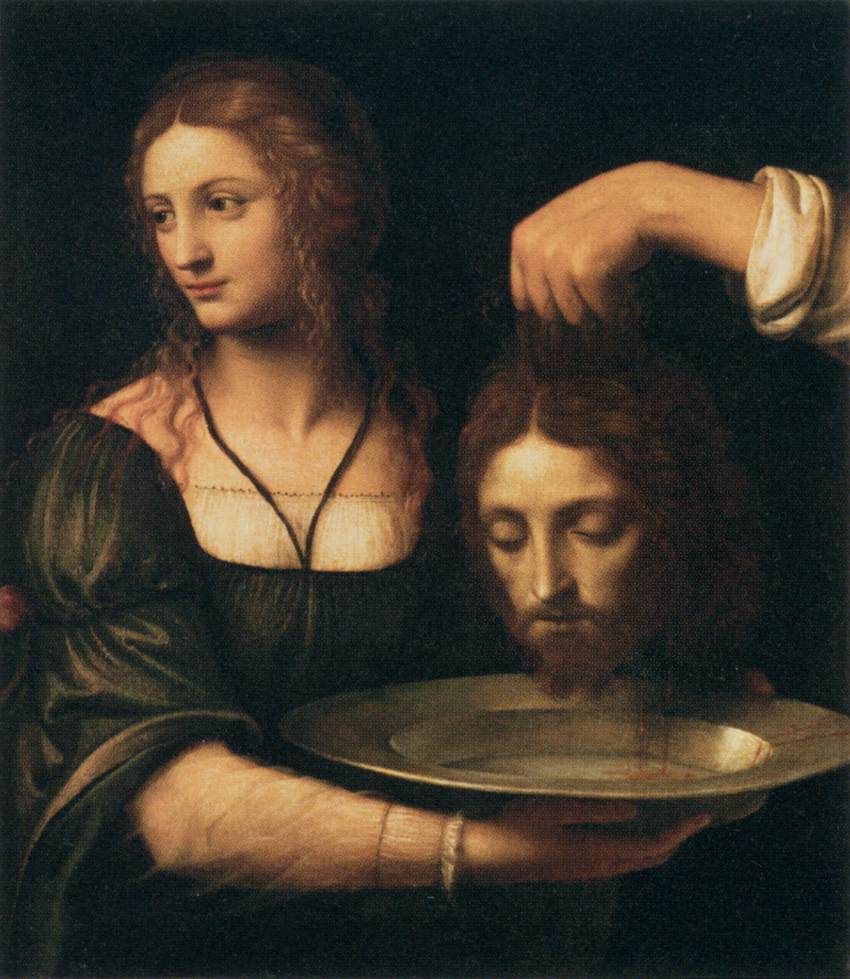
At that time Herod the tetrarch heard about the fame of Jesus, and he said to his servants, “This is John the Baptist. He has been raised from the dead; that is why these miraculous powers are at work in him.” For Herod had seized John and bound him and put him in prison for the sake of Herodias, his brother Philip’s wife, because John had been saying to him, “It is not lawful for you to have her.” And though he wanted to put him to death, he feared the people, because they held him to be a prophet. But when Herod’s birthday came, the daughter of Herodias danced before the company and pleased Herod, so that he promised with an oath to give her whatever she might ask. Prompted by her mother, she said, “Give me the head of John the Baptist here on a platter.” And the king was sorry, but because of his oaths and his guests he commanded it to be given. He sent and had John beheaded in the prison, and his head was brought on a platter and given to the girl, and she brought it to her mother. And his disciples came and took the body and buried it, and they went and told Jesus. Now when Jesus heard this, he withdrew from there in a boat to a desolate place by himself. But when the crowds heard it, they followed him on foot from the towns. When he went ashore he saw a great crowd, and he had compassion on them and healed their sick. Now when it was evening, the disciples came to him and said, “This is a desolate place, and the day is now over; send the crowds away to go into the villages and buy food for themselves.” But Jesus said, “They need not go away; you give them something to eat.” They said to him, “We have only five loaves here and two fish.” And he said, “Bring them here to me.” Then he ordered the crowds to sit down on the grass, and taking the five loaves and the two fish, he looked up to heaven and said a blessing. Then he broke the loaves and gave them to the disciples, and the disciples gave them to the crowds. And they all ate and were satisfied. And they took up twelve baskets full of the broken pieces left over. And those who ate were about five thousand men, besides women and children. (Matthew 14:1-21 ESV)

Grace and peace to you from Our Lord and Savior, Jesus Christ. Amen.

It’s really quite a party we’ve got here, all those people out there far from home. Just think about all the joy that’s going on as Jesus heals the sick. Jesus touching the folks who have a fever and the fever is gone. Jesus rubbing a red rash and poof the skin is normal. Jesus straightening a crooked limb and the straight leg dances with joy. Jesus speaking to a person who can’t speak and the still tongue begins to sing his praises. Jesus fixing all their problems. Jesus making all their hurts go away. Jesus doing what Jesus does.

The disciples must have been enjoying the moment, but then the something goes wrong. The good stuff lasts too late and it’s time for supper. Jesus’ disciples are getting nervous. They start thinking about something besides Jesus. They are distracted by the time. They think they need to give Jesus a nudge, a reminder. I can hear their conversation. “Peter, you tell him. You know how he is. He gets so busy helping folks he loses track of the time.” So they say to Jesus, “Send the folks away so they can buy food in the villages around here on their way home.”

But Jesus isn’t ready for the party to be over yet.

“They need not go away; you give them something to eat.”

Now the disciples are in the thick of it. It’s probably the last thing they expected. Maybe they made a plan, “What should we do? We’ll ask everyone to pitch in.” If they were Lutheran they’d call for a pot-luck. But the best laid plans of disciples often go astray. Just look at how inept their efforts turn out. With five thousand men there and some women and children too, the disciples, doing what they do, come up with a snack pack. Five loves and two fish is the modern day equivalent of one of those little plastic packages with a tiny dish of cheese and a couple of Ritz crackers. Ok, so now picture the crowd, a hungry crowd of some five thousand people and more. With the disciples’ best effort, they don’t even come up with enough of a meal for one person, let alone five thousand plus. Well now the party is over. The mob won’t even fight over what they’ve found. They drop the ball. They can’t provide. The disciples have failed. The crowd is going to go away hungry. It’s a bit surprising that they even show what they’ve found to Jesus at all.

Jesus uses it all to make a point. Maybe the disciples should have just answered out of the gate, “Lord, we can’t do it. Only you can provide for all these people.” That’s just what he’s about to show them. Jesus makes the party. First, he tells everyone to sit down. He commands them to sit, in fact. He wants everyone to know for sure who is doing what and who isn’t doing what. He wants everyone to know who is in control and who is about to provide. “Don’t do anything,” he’s saying. “I’ve come to give you what you need.” Then he takes the snack, the bread and fish, and blesses it; he breaks the bread, and gives it to the disciples to distribute. And they do. And he does. I don’t know what it was like, whether every time someone took a piece of fish or bread another appeared or if the baskets refilled only after they were empty, or whether there were suddenly bunches of baskets, it really doesn’t matter. Jesus provides for the people in abundance. He could have done it without the snack the disciples found. They show who they are by their thinking that they actually can do something. Jesus shows who he is by providing. Jesus is the life of the party, literally.

There was another party too. St. Matthew tells us about it right before he tells us of this one. The author wants us to make some kind of a connection between the two. That’s why he starts out,

Now when Jesus heard this, he withdrew from there in a boat to a desolate place by himself.

The “this” is the other party. It’s a party of a different kind. It’s King Herod’s birthday. It’s not difficult to imagine the difference. There’s drinking and carousing, and dancing, drunken laughter and over indulging of all kinds. Herod’s sexual fantasies are indulged. The daughter of Herod’s live in lover dances for him. It is quite a dance. Herod is so impressed or so moved that he offers her anything she wants. Who knows what he thought she wants. “What I really want, my King,” she says a death drips from her lips, “is John the baptizer’s head on a platter.” Her mother told her to as for that because John was telling everyone, in public, that she and the king were living in sin. He was causing such a stir that Herod had John thrown in prison. Now Herod is trapped. He made the promise right there in front of all of his guests. He doesn’t have the backbone to say “no.” He sends the solders to the cell to retrieve the gift. Just to show you what kind of a party it really is, just to show you what kind of people are living in the palace, when this young girl, this teenager, gets John’s head on a platter, it seems she calmly accepts it and takes it to her mother without any other reaction. Now that’s a party of a different kind.

Now we’d much rather have the first than the second. We’d much rather have Jesus fixing all our problems, Jesus balancing our checkbook, Jesus healing our cancer, Jesus smoothing over our arguments with our neighbor. And in fact, if you listen to those radio and TV preachers they’ll tell you that that’s what Jesus is really all about. Live for Jesus, find his purpose for your life and your life will be better. Obey God’s principals for living and God will give you health, wealth and happiness. Do such and such for God and he’ll be obligated to do such and such for you. Say this prayer 20 times a day and God will give you the desire of your heart. Jesus comes to make you all that you can be and give you your best life now. In fact, that’s what we might conclude by the feeding of the five thousand. But that’s only because we aren’t really seeing what’s going on here. That’s our sinful nature putting ourselves at the center instead of Jesus. We want Jesus to provide the way we want him to provide. “Jesus, if you’re not going to make my life easier, what good are you?” So when we see Jesus healing and feeding, our hearts naturally go straight to our own hopes and desires. We start thinking about how we can get God to do for us what we want him to do for us. That’s the kind of party we want Jesus to bring.

But lots of the time our lives really reflect the second party better. Oh, I’m not necessarily talking about the carousing. I’m talking about the suffering of John the Baptizer. John is hardly living his “best life now.” There’s not much victory in his severed head on a platter for a teenager. But that’s John’s whole life. He lived in the desert, ate bugs, and dressed in less than fashionable clothing. But look at what Jesus says about him.

Truly, I say to you, among those born of women there has arisen no one greater than John the Baptist. Yet the one who is least in the kingdom of heaven is greater than he. (Matthew 11:11 ESV)

And for all his trouble all his pointing to Jesus for all his greatness, John the Baptizer only loses his head.

Now what we might be missing is what’s actually going on in these two parties. That’s because we focus on ourselves instead of Jesus. Jesus provides for us. Of course he does. He became a man to provide for what we need. It’s right there in the story. Jesus tells the disciples to feed the crowds. They can’t do it. It’s the most basic need of people. They are helpless. They focus on themselves. They focus on the process. They focus on what they can do instead of focusing on Jesus. When they fail Jesus provides fully. John is helpless too. The thing is Jesus provides even in cases like John. The baptizer suffers. God is still providing. The baptizer dies. Jesus is still in control. It doesn’t matter if things are rosy in your life, or if things are sour. God is still providing. It doesn’t matter if you’re living your dream life, in your dream marriage, in your dream house, or if you’re life is at its lowest point ever. Jesus is still in control. That’s what faith is; believing that no matter what, God is providing what is most needed.

But our faith is weak. We are selfish, self-centered, self-focused. We read God’s word with our hearts looking for self help instead of looking for Jesus’ help. We are sinful people unable to provide for ourselves what we need most. We cannot remove our selfish sin from our lives. We try our own way but come up with a meager offering for God. We can change the external things and make ourselves look good, but the heart is still soiled and spoiled with sin. God doesn’t judge on external appearance. He judges based on the heart. Yours and mine are filled with sin. We fall back into it in a black heartbeat.

But Jesus provides. It just doesn’t look the way we think should. We think the first party; enough bread to go around; enough money to pay the bills; a little miracle here and there to keep our health up to par; a church that grows in numbers in spite of the declining population. But much of the time Jesus provides like the second party.

In fact Jesus’ life looks more like the second party. No not the carousing, but the suffering of John; Jesus suffering in the garden praying to God, the Father, for relief; Jesus suffering under the punishment of the Roman whip; Jesus suffering the humiliation of an unjust trial; Jesus enduring the pain of nails piercing his hands and feet and thorns in his head; Jesus dead on the cross, naked and bloody, stabbed and shamed. In all that suffering and death, Jesus is providing.

Jesus provides us with our greatest need. Like the bread in the wilderness Jesus gives us what we can’t possibly get any other way. Jesus provides for us the forgiveness of sins. You can’t get rid of the sin in your heart. Jesus can. He earns forgiveness for all people through his perfect life, death and resurrection. And he gives it to you and me, he provides it, as freely as he gave those folk the bread in baskets on the green grass. He provides it as abundantly as he did on that day at that party.

And we’ve got the party still going on today. Listen to how much it sounds like what we do here:

Then [Jesus] ordered the crowds to sit down on the grass, and taking the five loaves and the two fish, he looked up to heaven and said a blessing. Then he broke the loaves and gave them to the disciples, and the disciples gave them to the crowds.

You see, Jesus provides. He give you the forgiveness you need. But he doesn’t just make it available. He makes sure you know it is for you. He makes sure you know you’ve got it. Just like he broke that bread on the green grass, he breaks bread here. You open your mouth and receive what Jesus provides. Here he gives his very body and blood, the same that was bruised and beaten on the cross. You open your mouth and Jesus pours his forgiveness right into you. Jesus is the host of this wonderful meal. He is the provider here. Jesus is the host here, not your pastor. Jesus gives what you need, his body and blood for the forgiveness of your sins.

This party, the one on the green grass, is a picture of eternity. God is providing. And this party, the one where Jesus is giving, the one that happened on that green hillside, the one that continues here at our altar, well it goes on forever and ever and ever. Amen.

The peace of God that passes all understanding, keep your hearts and minds in Christ Jesus. Amen.

Sunday, July 24, 2011

Matthew 13:44-52; Sixth Sunday after Pentecost; July 24, 2011;

Trinity Evangelical Lutheran Church, Creston, Iowa;

“The kingdom of heaven is like treasure hidden in a field, which a man found and covered up. Then in his joy he goes and sells all that he has and buys that field. (Matthew 13:44 ESV)

Grace and peace to you from our Lord and Savior, Jesus Christ.

Well, there it is in black and white… well in some bibles it’s red and white, because it is Jesus words… Jesus tells us that if we want the treasure of the kingdom of heaven we should be willing to sell everything we have. Get out your check book and write the big one. You know the check that leaves the big goose egg in your account. Don’t worry you’re going to put some more in there anyway because you’ve still got your house to sell… that new car in the parking lot… the new computer you got last month with the ‘free money’ the government gave you to stimulate the economy. And you farmers get your deeds in order that farmland has to go too… all of it. Ladies your mothers good china that dad brought back from Korea. Your knick-knacks; your quilts; Guys your tools; trucks; tractors; lawnmowers; etc. It’s all gotta go. Don’t forget your personal jewelry, wedding rings, rings you inherited from your father, and the clothes; yep, all those extra shoes in your closet; the pants that fit; and even the ones that don’t. Am I forgetting anything? Well if I am that’s gotta go also. And then write out another check and close up the account. ‘Cause that’s what Jesus says. Isn’t it? Well, that’s what the parable says:

“The kingdom of heaven is like treasure hidden in a field, which a man found and covered up. Then in his joy he goes and sells all that he has and buys that field. (Matthew 13:44 ESV)

When you read this parable you read that the kingdom of heaven is like treasure in a field. The Kingdom of Heaven, isn’t that our salvation. Isn’t that all that Jesus came to bring to us? So be like the guy in the parable and sell everything you have and buy it. That’s what this guy does, isn’t it? He finds that valuable treasure in the field and he sells everything?

Well before we get out our garage sale signs maybe we should back up and talk just a minute about this short parable so we understand it right. So we understand it like the folks Jesus was talking to. How would they have understood it? Well, those days were not like these days in a lot of ways. First, be clear and understand that this guy in the parable isn’t doing anything illegal or underhanded. Back then when you owned a plot of land you didn’t own everything in it. Not like today with mineral rights and all that. You didn’t own anything in the field that you didn’t know about. So the treasure doesn’t ‘belong’ to the guy who owns the field just because it’s in his field. He doesn’t own the treasure because he doesn’t know about it. And there’s another very small detail to take notice of. The story doesn’t say that the guy picked up the treasure. It says he found it and covered it up again. That’s because, if he’s a hired hand, working in the field, everything he does he does on behalf of the guy he’s working for. So if he picks up the treasure it belongs to his boss. So he covers it up instead. Then he goes and sells everything he has to get possession of the field, and since he knows about the treasure, it’s his. Jesus listeners would have thought this man very wise, very smart. No one would have accused him of doing anything underhanded. It’s the way anyone there would have operated. This guy in the parable is the “good guy.”

Ok, so now back to our reading of the parable. Jesus says (doesn’t he?) that if you find the kingdom of heaven, you should be willing to sell all you have to get it. You should be as shrewd as this guy, as smart as this guy. You should be willing to sell all you have and buy treasure. Now if the treasure is God’s Kingdom, Jesus Christ and all that He has done for you, you know exactly where to find it. You know where to find Jesus. He’s here. Right here in his Word and Sacraments. The treasure isn’t even hidden in a field. So get crackin’; get sellin’; get moving the merchandise. Right?

Well, let’s ask a simple but important question. What if you sell everything and you don’t have enough to buy the land? What if you’ve disposed of all your wealth, all your possessions, all your worldly goods but the cloths on you back and you still don’t have enough to get the treasure? Well, that’s a real problem isn’t it? And in fact, that is our problem. The Bible tells us that we can’t earn our salvation or purchase it in any way. Our good works aren’t good enough and our money is worthless. So maybe Jesus doesn’t mean exactly what He’s saying here. Maybe the parable isn’t really about ‘getting’ the treasure but just about ‘wanting’ the treasure. Maybe he’s saying that we should be willing to sell all that we have to get the kingdom, or to get Jesus. Yea, that must be it. “I’ve Decided to Follow Jesus” as one hymn says. “I’d give up anything for Jesus.”

Hey, there’s a story about that in the bible isn’t there? Yea, it’s in Matthew 19.

And behold, a man came up to him, saying, “Teacher, what good deed must I do to have eternal life?” And he said to him, “Why do you ask me about what is good? There is only one who is good. If you would enter life, keep the commandments.” He said to him, “Which ones?” And Jesus said, “You shall not murder, You shall not commit adultery, You shall not steal, You shall not bear false witness, Honor your father and mother, and, You shall love your neighbor as yourself.” The young man said to him, “All these I have kept. What do I still lack?” Jesus said to him, “If you would be perfect, go, sell what you possess and give to the poor, and you will have treasure in heaven; and come, follow me.” When the young man heard this he went away sorrowful, for he had great possessions. And Jesus said to his disciples, “Truly, I say to you, only with difficulty will a rich person enter the kingdom of heaven. Again I tell you, it is easier for a camel to go through the eye of a needle than for a rich person to enter the kingdom of God.” (Matthew 19:16-24, ESV)

Well, there’s a guy who just doesn’t get does he. He had the chance to do exactly what the parable says, and he tanked it. Jesus showed him the “treasure in heaven” he’s asking the right question isn’t he? What must I do to have eternal life? But in the end he walks away simply because he’s unwilling to sell everything he has to get it. Well, that’s rich folks for you; all they think about is their money. He could have easily spread the love a bit and made all those folks around Jesus happy, you know like the movies where the money from the stingy rich guy gets thrown in the air and everyone around gets a handful. But no, he thinks more of his money than the Kingdom of God.

Ah, but wait a second. Look at what the disciples say when Jesus says, “it is easier for a camel to go through the eye of a needle than for a rich person to enter the kingdom of God.” They don’t say, “those silly rich people. They think too much of their money.” They say, “Who than can be saved?”

When the disciples heard this, they were greatly astonished, saying, “Who then can be saved?” But Jesus looked at them and said, “With man this is impossible, but with God all things are possible.” (Matthew 19:24-26 ESV)

You see, the disciples see something; hear something that we don’t see at first. When Jesus talks about a camel going through the eye of a needle he’s not talking about something that doable, he’s talking about something that’s impossible. You can tell by the disciples’ reaction. All of the sudden the disciples are afraid for their own salvation. And Jesus tells them they otta be. “With man this is impossible.” Jesus says. “You can’t do it, guys.” You can’t sell enough stuff to buy it. You can’t do enough good stuff to earn it. “For you it’s impossible,” Jesus says.

And now guess what? Jesus words reach right out of the pages of the book and grab you by the throat too. You can’t do it either, dear Christians, fellow members of Trinity Evangelical Lutheran Church, Creston, Iowa. No matter how much you sell, you can’t sell enough to buy the field the treasure is in. You can’t do enough good stuff to make God like you and save you. You are a poor miserable sinner, deserving of God’s wrath and punishment. No matter how hard you try you can’t do enough to earn the treasure. And I’m not just talking about money either. You can write checks till you’re blue in the face. You can come to church every Sunday. You can sing in the choir (if we had one). You can teach Sunday school for years. You can be better, cleaner, less arrogant than the whole town of Creston, Iowa, but none of that will get you one lick closer to the treasure. You can want the treasure more than anything else but you can’t have purchase it, because you don’t have enough, and you aren’t good enough. Because for you Jesus says, “this is impossible.” It’s because the price of the field is too high. The cost of getting the treasure is too much.

If the treasure is salvation, the Kingdom of God, then the only way you could earn it is to be perfect. Jesus tells us that, too. “Be perfect as your father in heaven is perfect.” Look how he pushes that rich young man to the brink of despair. Jesus keeps upping the ante until what he’s looking to get by his works is out of reach. Jesus does that in other places too. He tells people if they call people stupid, or even think it they deserve hell because it’s just the same as killing them. He says that if you look at a woman with lust in your heart it’s the same as sleeping with her, and you deserve hell. You see. To buy the field you’d have to do more than you can do. You’d have to sell more than you have to sell. And just wanting to do it, just having the desire to have the treasure won’t get you the treasure either. So… what are we to think? What are we to do? What is Jesus trying to do to us here? What kind of a parable is this anyway?

You know, it occurs to me that we might just be reading this thing all wrong. Well, at least I hope we are reading it all wrong. What is it I always say about reading the bible? Jesus is at the heart and center of it all. If you want to understand what the bible is talking about you’ve got to put Jesus Christ crucified for you at the center of your thinking. You know what, when I read the parable with me as the guy who finds the treasure that puts me at the center. How would I read it so Jesus is there instead? How about this? Jesus is the guy who finds the treasure. Jesus is the guy who sells everything he has and buys the field and then rejoices in the treasure. Then what is the treasure?

“For God so loved the world, that he gave his only Son, that whoever believes in him should not perish but have eternal life. For God did not send his Son into the world to condemn the world, but in order that the world might be saved through him. (John 3:16-17 ESV)

Now remember that “for God so loved” in this passage isn’t talking about the amount of God’s love but rather the way that he showed his love. God loved the world in this way… Jesus Christ humbles himself to be a living breathing man. He leaves God the Father’s side, the glory of heaven to suffer the same things that all people suffer. He cried. He had sore feet from walking and he was hungry. He was tired and weary needing rest. He lost loved ones to death, and was hated by enemies, and betrayed by friends. And this is where Jesus is different from you and me. In all of this he didn’t sin. He didn’t give up his relationship to God, the Father. He constantly obeyed God’s will for his life. He loved people selflessly always. In fact, Jesus human life, was perfect in every single way. That’s where you and I fall short. We aren’t perfect. We can’t be. We can’t sell enough to buy the field. But Jesus can. And he does. On a cross, a perfectly horrible means of punishment, created by Satan himself, Jesus bore the sin of the whole world, giving his perfect life in the place of imperfect people. He suffered punishment for all sinful, imperfect people everywhere. He bought the field. He purchased it with his holy and perfect, sinless, priceless death on the cross. He bought the field with his holy and precious blood and his innocent suffering and death. St. Paul told it to our Christian brothers and sisters in Philippi like this:

Have this mind among yourselves, which is yours in Christ Jesus, who, though he was in the form of God, did not count equality with God a thing to be grasped, but made himself nothing, taking the form of a servant, being born in the likeness of men. And being found in human form, he humbled himself by becoming obedient to the point of death, even death on a cross. (Philippians 2:5-8 ESV)

Why in the world would Jesus do that? Well, to get the treasure, of course. So what’s the treasure? What is so valuable to Jesus that he would is willing leave heaven and walk the earth as poor, humble man? What has so much worth to Jesus that he suffers a criminal’s death, a sinner’s death, the punishment of hell for all human sin? What does Jesus love so, that he makes sure the story of what he did is told over and over again? What is Jesus’ treasure, the thing that he joyfully sold all he had in order to have it for himself? You. Amen.

The peace of God that passes all understanding, keep your hearts and minds in Christ Jesus, Amen.

Wednesday, July 06, 2011

The Cathedral at Strasbourg, France

I took these images are of the Cathedral at Strasbourg, France this week.  They say it is one of the most beautiful in all of Europe.  As far as I'm concerned it is, but it is the only one I've seen.  Construction began on this building in the 12th Century.  Can I say, "They don't make them like this anymore!

This summer there is a light show on the Cathedral coordinated with classical music.

This is just one of the small bonuses of attending the Academy of Apologetics, Evangelism and Human Rights this year in Strasbourg.  


Monday, June 13, 2011

Acts 2:1-4; The Day of Pentecost; June 12, 2011;

Trinity Evangelical Lutheran Church, Creston, Iowa;

When the day of Pentecost arrived, they were all together in one place. And suddenly there came from heaven a sound like a mighty rushing wind, and it filled the entire house where they were sitting. And divided tongues as of fire appeared to them and rested on each one of them. And they were all filled with the Holy Spirit and began to speak in other tongues as the Spirit gave them utterance. Now there were dwelling in Jerusalem Jews, devout men from every nation under heaven. And at this sound the multitude came together, and they were bewildered, because each one was hearing them speak in his own language. And they were amazed and astonished, saying, “Are not all these who are speaking Galileans? And how is it that we hear, each of us in his own native language? Parthians and Medes and Elamites and residents of Mesopotamia, Judea and Cappadocia, Pontus and Asia, Phrygia and Pamphylia, Egypt and the parts of Libya belonging to Cyrene, and visitors from Rome, both Jews and proselytes, Cretans and Arabians—we hear them telling in our own tongues the mighty works of God.” And all were amazed and perplexed, saying to one another, “What does this mean?” But others mocking said, “They are filled with new wine.” But Peter, standing with the eleven, lifted up his voice and addressed them, “Men of Judea and all who dwell in Jerusalem, let this be known to you, and give ear to my words. For these men are not drunk, as you suppose, since it is only the third hour of the day. But this is what was uttered through the prophet Joel: “ ‘And in the last days it shall be, God declares, that I will pour out my Spirit on all flesh, and your sons and your daughters shall prophesy, and your young men shall see visions, and your old men shall dream dreams; even on my male servants and female servants in those days I will pour out my Spirit, and they shall prophesy. And I will show wonders in the heavens above and signs on the earth below, blood, and fire, and vapor of smoke; the sun shall be turned to darkness and the moon to blood, before the day of the Lord comes, the great and magnificent day. And it shall come to pass that everyone who calls upon the name of the Lord shall be saved.’ (Acts 2:1-21, ESV)

Grace and peace to you from our Lord and Savior, Jesus Christ. Amen.

“Lost Dog!” The sign said. “$500 reward. Description: Black and tan mixed breed. Flea-bitten. Left hind leg missing. Blind in right eye. Answers to the name, ‘Lucky’”

Now Lucky doesn’t seem like much of a dog. Not to me anyway. But there is someone who wants him back and he is willing to pay the price to do it. The funny thing is that Lucky doesn’t sound like a dog that’s even able to do a lot. He certainly isn’t worth the reward that’s offered. He has no pedigree, can’t see, can’t run, plagued by fleas… and yet someone wants him back. Someone loves him that much.

Have you ever felt like Lucky? Lost? Unable to do what needs to be done? I have. We all feel that way at one time or another. Actually, God makes it quite clear that we were all like Lucky. The entire human race is “lucky”: lost in our sins, hell-bound, spiritually blind and unable to see God, unable to do what God wants us to do. And yet, God paid the price to have us back. The price He paid was more than a $500 reward. He paid the price of His only begotten Son. Jesus suffered and died on the cross to have us found. Someone loves Lucky a lot. God loves us even more. You and I have already been found, and returned home to have a relationship to God again.

Now just think another moment about crippled, blind, worthless, Lucky again. I think the Disciples and the folks gathered on the first Pentecost felt. It’s true they’d seen the resurrected Jesus, but they probably felt pretty worthless to tell people about Him. Who’s going to believe a bunch of flea-bitten fishermen from Galilee? That’s where I think you and I can relate. I’m sure those folks gathered together there had the same fears and problems and questions you have when you think about sharing the Good News of Jesus with people. We feel pretty worthless when it comes to that kind of thing. It’s much easier to get out the checkbook and pay to have it done for us. I’ll bet you’ve had thoughts like these: “I don’t know the bible well enough to answer questions that will come up if I talk about Jesus.” “Christianity is too difficult to understand. It takes years to learn. Where do I begin?” “I can’t tell that person about my faith we have too much questionable history, they know me too well to believe my faith is real.”

That last one thought is one of the reasons why I think evangelism is more difficult in communities like ours than anywhere else. It is very difficult to speak about Jesus to someone you’ve known all your life and never had anything remotely spiritual pass between you. And Jesus name has only been spoken of as part of a curse. In communities like ours, we already have well established relationships, and those relationships have well established expectations, which may very well include the idea that religion isn’t to be discussed.

Well, the disciples had similar problems. They doubted their ability to tell people about Jesus, just as you do. They didn’t just feel lost, like Lucky, but worthless, too.

That’s one of the things I like about this account of Pentecost. I’ve read it hundreds of times, and every time I come to the same conclusion. The disciples didn’t do a thing. They sat in a room waiting, un-inspired to do what Jesus told them they would be doing. The thing that fired them up was the fire… of Pentecost. The rushing wind told them that God was there. They were filled with the Holy Spirit, the writer tells us. The tongues of fire that showed them what was happening to them also told them what to do next… it was the sign of what the Holy Spirit was giving them. I know the common picture you have in your mind is of the fire setting on their heads. It’s not a bad picture. But I think the fire is just as a literal translation would picture it. The fire distributed to them, in “tongues like fire.” Not on top of their heads but in their mouths, after all as soon as the Spirit came to them they began to speak.

Now by this time the crowds had gathered to see what was going on. That windy sound drew them. And the disciples were speaking in languages they hadn’t learned, to people from all over the world, who understood what they were saying. And don’t think for one moment they were talking about the weather. When the Holy Spirit speaks, as He did on that day, He always speaks about Jesus. Nobody expected it to happen, least of all the disciples. But you see, God had promised that this is what they would do, and He always makes good on His promises.

Peter got up before the crowd and preached a sermon. When it was done, the Holy Spirit gave the gift of faith to about 3,000 people. Pretty astonishing for a rag-tag group of fishermen from Galilee. Even though they were more like our dog Lucky, God used them to accomplish something great. The Holy Spirit equipped them to do the task that He gave them to do.

Now, this is the point I want you to think about. You’ve been equipped to do exactly what God has called you to do. It might not be as dramatic as speaking in foreign languages you’ve never been taught. You might not hear the violent wind and have fire coming out of your mouth, but the very same Holy Spirit is in you that was in those disciples in Jerusalem. You see, that’s Jesus’ promise to you. “If I go, I will send Him to you.” In your Baptism God came to you in the person of the Holy Spirit (Acts 2:38). He lives in you and He equips you to do the task at hand. Think about it this way: If He can make “Galileans” speak in foreign languages that they never learned, He can and will help you speak the simplicity of what Jesus did for you.

That’s why we lit the candles during the Acts reading today. That fire you held in your hands isn’t the Holy Spirit, but I wanted you to feel connected to the disciples. There was no way for me to put that fire into your mouth… but that’s exactly what God has already done through the Holy Spirit in you. You might feel worthless like the dog, Lucky, but that doesn’t matter. It’s not up to you to say the right thing anyway. It’s only up to you to speak. Just like He gave the disciples the foreign words to say, He’ll give you the words to say. That’s exactly why He’s there.

So, where do you start? How about a few practical tips: First, pray that the Holy Spirit will show you the opportunities you have. They are there in your everyday life. He’ll make you aware of them. Second, remember that even your Christian friends need to hear about Jesus. Just think about what it means to you to hear of God’s love for you in Jesus. It doesn’t matter if they are Presbyterian, Methodist, or even members of Trinity, we all need to hear about Jesus again and again. Keep it simple. You don’t have to preach a sermon, that’s my job. Just take a deep breath, call upon the Spirit and say something about Jesus. The Holy Spirit is right there to guide you, depend on Him. You have God’s promise that it will be enough.

There’s a story in the Old Testament about the Prophet Elisha and a poor widow (2 Kings 4:1-7). She was about to loose everything so she came to Elisha for help. Her husband had died and the creditors were at the door. Since she couldn’t pay them her sons were to be made slaves to pay the debts. All she had was a little flask of oil. The prophet told her to go to her neighbors and borrow all the containers she could get her hands on, “not too few!” He urged her. “Go into your house and start pouring… and pouring… and pouring.” She did what he said and as long as there was another pot to pour into, the oil kept flowing and flowing and didn’t run out.

You know, God poured out His Holy Spirit on Pentecost just as He promised. He poured out His
Spirit on you in Baptism and the Spirit never runs out. You see Him at work all the time. Every time another baby is baptized, every time the Cross of Christ is proclaimed, every time you hear “I announce the grace of God to all of you …” and even when you receive the body and blood of Christ for the forgiveness of your sins, that is the Holy Spirit giving and giving.

So Pentecost is for you. It’s a reminder that you aren’t alone but Jesus is with you through the presence of the Holy Spirit in your life. God promises us, “I will not leave you or forsake you.” (Joshua 1:5) He proves it through the life death and resurrection of Jesus, and the gift of the Holy Spirit. He rescued you when you were lost and helpless. Amen.

The peace of God that passes all understanding keep your hearts and minds in Christ Jesus. Amen.
Monday, June 06, 2011

Acts.1.1-11; The Ascension of Our Lord; June 5, 2011;

In the first book, O Theophilus, I have dealt with all that Jesus began to do and teach, until the day when he was taken up, after he had given commands through the Holy Spirit to the apostles whom he had chosen. To them he presented himself alive after his suffering by many proofs, appearing to them during forty days and speaking about the kingdom of God. And while staying with them he ordered them not to depart from Jerusalem, but to wait for the promise of the Father, which, he said, “you heard from me; for John baptized with water, but you will be baptized with the Holy Spirit not many days from now.” So when they had come together, they asked him, “Lord, will you at this time restore the kingdom to Israel?” He said to them, “It is not for you to know times or seasons that the Father has fixed by his own authority. But you will receive power when the Holy Spirit has come upon you, and you will be my witnesses in Jerusalem and in all Judea and Samaria, and to the end of the earth.” And when he had said these things, as they were looking on, he was lifted up, and a cloud took him out of their sight. And while they were gazing into heaven as he went, behold, two men stood by them in white robes, and said, “Men of Galilee, why do you stand looking into heaven? This Jesus, who was taken up from you into heaven, will come in the same way as you saw him go into heaven.” (Acts 1:1-11, ESV)